


Executive Summary
Populations are ageing, workforces shrinking, and growth slowing. Yet many do not realise that longer, healthier lives hold potential for more fulfilling careers, increased consumer power, and boosts to markets. Boards that see ageing only as a cost will miss the enormous opportunities in terms of:
· Talent: The ability of businesses to retain and renew experienced workers to avoid shortages and preserve capability.
· Markets: Older consumers hold rising wealth and loyalty yet remain under-served.
· Legitimacy: Policy makers and investors are beginning to demand demographic readiness.
The companies that act now to reap the benefits of an ageing population will capture the longevity dividend. Those that do not face workforce shortages, reputational risk, and lost growth. In this way, a lack of a longevity strategy means a lack of a growth strategy.
Introduction
1. Demography is not a forecast but a certainty. Ageing populations are reshaping labour markets, consumption, and fiscal systems. Europe’s old-age dependency ratio (individuals aged 65+ relative to the working age population) has risen from roughly a quarter in 2000 to about a third today and is on course to approach one-half by mid-century. In the UK, over-65s account for c.19% of the population and will exceed a quarter within a generation. Fertility in most advanced economies sits well below the 2.1 children replacement rate (Italy ~1.2, Spain ~1.3, South Korea ~0.7), while life expectancy and health-span (defined by the Cambridge Dictionary as “the number of years that someone lives or can expect to live in reasonably good health”) have both lengthened.
2. The consequences of this, in short, are fewer young entrants to economies, more older workers, and a rising share of older consumers. Global contrasts complicate the picture but do not reverse it: Japan’s population is shrinking and faces persistent labour shortages. Without actions to address its own demographic shifts, Germany would lose millions of workers through the 2030s. In the United States, immigration helps slow ageing even as dependency ratios keep rising; however, the staunchly anti-immigration agenda of the current administration threatens this trend. In the Middle East a young demographic profile persists while life-expectancy climbs and ageing pressures loom within one to two decades; and Africa remains the youngest region globally, with fertility falling and urbanisation accelerating (based on data from MPI, Brookings, World Bank, and UN demographic projections).
3. What is more, today’s older adults are not just living longer, they’re living better. According to the IMF, 70-year-olds now show the cognitive and physical capacity of 50-somethings a generation ago. Retirement is no longer a full stop. One in seven UK retirees is already back at work or considering it. While 34% cite cost-of-living pressures, others are “unretiring” for purpose, stimulation, and connection, reshaping the end of work into a new beginning.
4. For businesses the implications of this demographic shift are immediate, not theoretical. To protect capability, firms must shift from a workforce management strategy of hire-and-replace to one of retain-and-renew: keep experienced people, update skills, and make work sustainable for longer. They must also acknowledge that customer portfolios are skewing older in housing, financial services, health, leisure and travel. A high-wealth, high-loyalty cohort of 60+ consumers is growing in size and spend, yet remains under-served in product design and marketing.
5. The structural direction — older populations, smaller entry cohorts, longer working lives — is locked in. Immigration and technology can soften but not neutralise the shift. While migrant flows are politically constrained, automation and AI increase demand for judgement, quality, and trust; areas where the experience brought by age is an asset.
6. In summary, it would benefit businesses to think of ageing similarly to AI: a structural driving force in markets, talent, and policy.

The Macroeconomic Stakes
7. Ageing is a macro force, not a niche HR issue. International analyses suggest that, absent reform, population ageing could knock more than a full percentage point off annual global growth over the next quarter-century, a structural headwind that conventional stimulus cannot erase. The results: fewer workers, slower labour-supply growth, rising fiscal burdens, and tighter labour markets that, without productivity gains, squeeze margins.
8. The risks to businesses if they do not adapt their workforces to become more age diverse are various: persistent vacancies, wage inflation in scarce skills, knowledge loss from retirements, and execution risk if strategies assume abundant junior hires.
9. Those that do can enjoy a “longevity productivity dividend” if they retain, reskill, and redesign roles. Where mid-life learning is normal, digital skills refreshed, and health supported, participation at 55–69 rises and productivity holds. Businesses experience lower churn, higher customer satisfaction, and new revenue as products and channels adapt to older consumers. The economic implications of a more age diverse workforce are enormous: official estimates indicate that if people, on average, worked just one additional year of their lives, extending their effective retirement ages, GDP would be roughly 1% higher within six years; a meaningful uplift in a low-growth environment.
10. Two objections are common. First, that older workers reduce aggregate productivity; yet age-related differences are heterogeneous and context-specific. They narrow or reverse when ergonomics, tools, and training adjust. Research by Axel Boersch-Supan and Matthias Weiss of the Munich Research Institute for the Economics of Aging shows individual productivity does not decline with age.
11. Second, that automation/AI will “solve” ageing by replacing labour; in reality, technology changes the task mix and often raises the value of experience. Automation is a complement to, not a substitute for, age-diverse human capital.
12. For boards, this translates into capital-allocation choices. Investment in prevention and workforce health, in mid-career skills, and in age-smart job design has macro-scale returns at firm level. It lengthens productive tenure, stabilises delivery, and de-risks wage and vacancy shocks. On the demand side, aligning product and brand to an older, wealthier customer base is one of the few credible near-term growth levers in stagnant markets.
13. In summary, ageing will weigh on growth and public finances, but firms that adapt unlock resilience in the form of steadier output, protected margins, and new revenue from older consumers. Longevity is a macro-consideration and should be treated as such in strategy and capital plans.
Policy and Investor Signals
14. Demographic ageing is not just a social trend: governments and investors are adjusting. For boards, this means the issue is no longer optional. Policy will shape incentives and obligations, while investors are beginning to treat longevity as a marker of resilience and quality.
15. Policy signals: Governments are raising retirement ages and linking them to life expectancy. Nearly half of over-50s in the UK fear they haven’t saved enough for retirement, a stark reminder that lifespans have outpaced wealth-spans. The UK pension age rises to 67 by 2028, with more increases expected. France legislated a rise from 62 to 64 despite protests. Germany, Italy, and the Netherlands use ‘linkage’ systems that rise automatically with life expectancy. These reflect fiscal necessity: without later-life work, public finances are unsustainable.
16. Beyond pensions, governments are encouraging longer working lives: Japan subsidises employers who retain staff beyond age 65 through the Elderly Employment Stabilization Subsidy and is considering raising the upper age limit to 70. Singapore has lifted the statutory retirement age to 64 and the re-employment age to 69 by 2030, with its Ministry of Manpower supporting reskilling of older workers. In Europe, the EU Corporate Sustainability Reporting Directive (CSRD) and its European Sustainability Reporting Standard S1-9 require companies to disclose workforce age distribution and explain how capability planning supports long-term value creation. The UK’s response, centred on Midlife MOTs and limited advice schemes, remains modest by comparison. It is a striking missed opportunity to mobilise experienced workers at a time of acute labour-market and fiscal pressure. With the State Pension Age rising and skills shortages persisting, employers are likely to be expected to retain older workers, not release them.
17. Healthcare policy is shifting in parallel. The World Health Organisation has made “healthy ageing” a global priority. Governments increasingly see extending health-span as the most effective lever to reduce fiscal pressure. That means more investment in workplace health, mid-life screenings, and preventive care, with the growing expectation that companies support their employees’ wellbeing across their lives. The WHO’s prioritisation of healthy ageing is echoed by the OECD and G7 as key to fiscal sustainability. The UK’s Major Conditions Strategy and NHS Long Term Plan both pivot towards prevention and mid-life health. Governments now view health-span extension as a fiscal lever, prompting more investment in workplace health, screenings, and preventive care — and rising expectations that employers support wellbeing across the life course. (“DWP launches new Midlife MOT website,” Department for Work and Pensions, July 2023, https://www.gov.uk/government/news/dwp-launches-new-midlife-mot-website; “Promoting Health and Well-being at Work: Policy and Practices,” OECD, 2022, https://www.oecd.org/content/dam/oecd/en/publications/reports/2022/11/promoting-health-and-well-being-at-work_ce16d7cd/e179b2a5-en.pdf)
18. Investor signals: Investors are beginning to view longevity readiness like ESG:[1] a proxy for foresight, governance, and long-term performance (“How investors can advance decent work,” PRI, July 2022). Disclosure rules are tightening in response. In the U.S., the SEC’s Investor Advisory Committee recommended that companies report workforce metrics such as turnover and age composition, citing investor demand for comparable human-capital data. In Europe, the Corporate Sustainability Reporting Directive (CSRD) and accompanying ESRS S1-9 require companies to disclose workforce age distribution and explain how capability supports value creation — regulatory changes designed to inform investors and strengthen corporate governance.
19. Global asset managers are following suit: BlackRock’s Chairman and CEO Larry Fink has warned that ageing demographics have ‘completely unraveled’ traditional retirement systems and has called for pension reform to reflect longer lifespans and the demographic pressures now placed on retirement systems. BlackRock’s 2024 Stewardship Priorities call for boards to demonstrate oversight of human capital risks, succession, and skills planning, while State Street and Legal & General Investment Management have made workforce resilience and diversity, explicitly including demographic balance, central to their engagement agendas.
20. These signals are early but familiar. ESG began on the margins and is now mainstream. Longevity could follow the same path, with boards expected to disclose workforce age profile, reskilling, and consumer strategy. First movers gain reputational advantage; laggards risk reactive compliance.
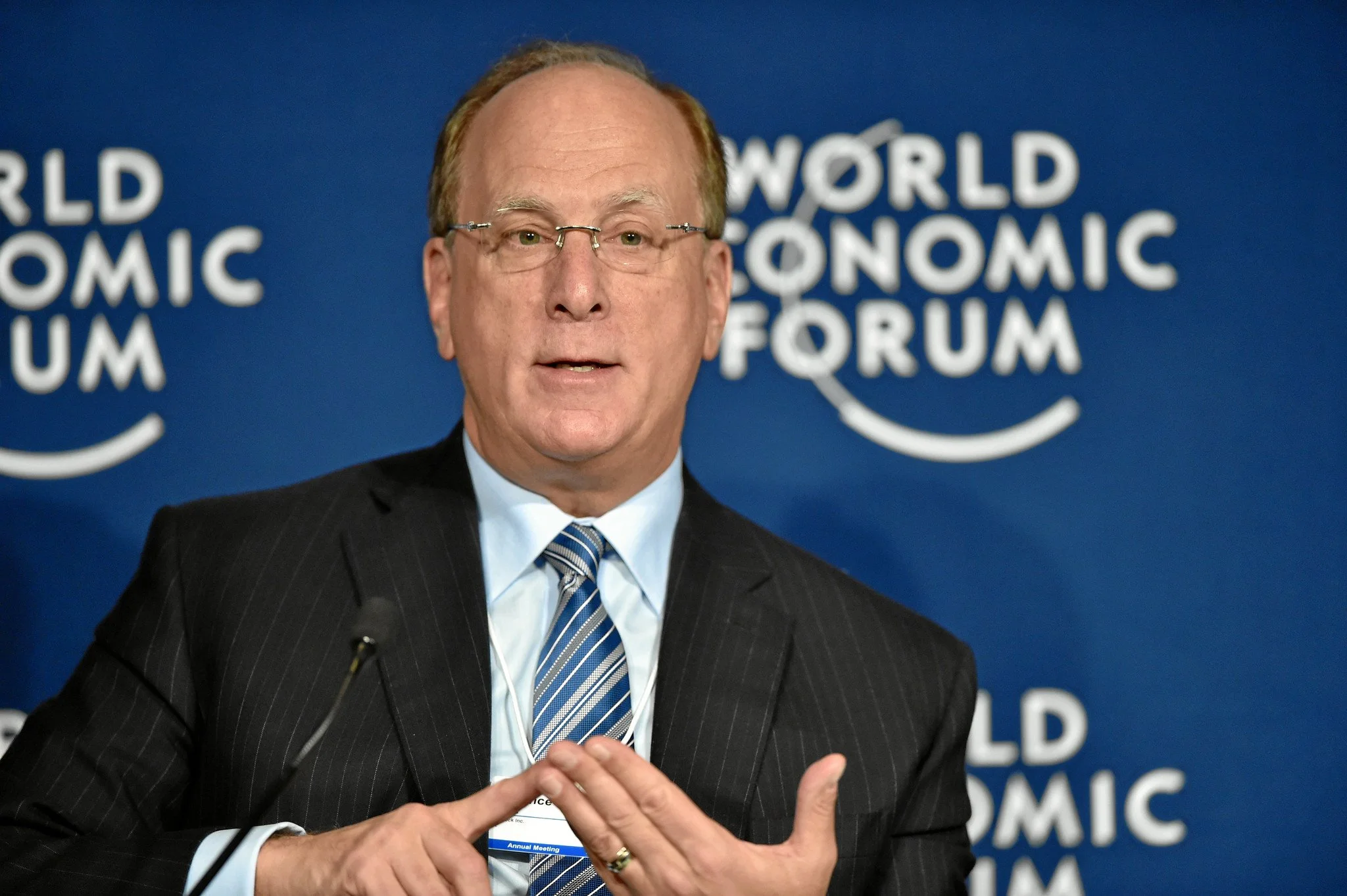
Image Credit: World Economic Forum. Licence.
21. The risks of inaction are rising: Firms that ignore demographic and policy signals face higher costs if governments move abruptly to extend working lives, as highlighted in the State Pension Age Review and the OBR’s Fiscal Risks Report. Fiscal pressures could mean new taxes or compliance burdens as health and pension systems strain. Investors are beginning to discount companies unprepared for demographic change, much as they do climate laggards, with Aviva Investors and the PRI (“How investors can advance decent work,” PRI, July 2022) both framing longevity as a material ESG factor. And reputational exposure is growing: age discrimination already features in rising tribunal cases and public scrutiny.
22. In summary, governments and markets are treating ageing as a structural force. Boards that anticipate policy and investor expectations will strengthen their legitimacy and access to capital. Those that ignore them will find regulation, taxation, and reputational risk imposed on them from outside. Publishing clear data on workforce age, reskilling results, and strategy for older consumers allows investors to assess a company’s demographic readiness.
The End of the ‘Three-Stage Life’ and the Workforce Challenge
23. The twentieth-century model of life in three stages — education, work, retirement — no longer matches reality. People are living longer, healthier lives; careers now stretch to 50 years or more; and retirement is increasingly phased, reversed, or reinvented. People move in and out of work to travel, study, or develop portfolio careers. Yet corporate and societal systems remain stuck in the old model. Training budgets concentrate on the young, pensions and succession planning assume early exit, and recruitment campaigns often target only entry-level cohorts.
24. This structural lag is reinforced by cultural bias. Ageism — the assumption that older workers are less adaptable, less productive, or more costly — remains common, even in boardrooms. But research consistently challenges these stereotypes. The OECD finds no systematic productivity decline with age.
25. AARP data show older employees often outperform in reliability and customer service. The evidence suggests that experienced workers bring distinct advantages:
Knowledge and continuity. Older staff hold institutional memory, industry expertise, and networks that are costly to replace. In sectors facing waves of retirement, the loss of tacit knowledge is a material risk.
Stability and dependability. Older workers generally have lower turnover and absenteeism. This provides continuity, reduces recruitment and training costs, and strengthens team cohesion.
Mentoring and culture. Experienced employees transmit skills and values across generations, accelerating learning for younger colleagues and anchoring organisational culture in times of change.
Customer connection. Older consumers are the fastest growing and wealthiest demographic, yet remain underserved. Staff at the same stage in life as them can better understand their needs and build trust.
26. Companies that act on these insights are seeing returns. For example:
Case Study: easyJet – Experience doesn’t retire
In 2022 easyJet launched a recruitment campaign for over-45s, based on the value of calm under pressure and life experience. The campaign normalised career reinvention, and applications surged with a 30% in those employed over the age of 60. The move attracted positive media coverage, positioning easyJet as a future‑ready employer.
Case Study: B&Q – Older workers, stronger sales
B&Q, in an experiment in its Macclesfield store which is staffed predominantly (or entirely) by older workers, benchmarked it against other stores. The Macclesfield store was found to enjoy 18% higher profits, six times lower turnover, 39% less absenteeism, and a more positive perception of customer service. These findings prompted B&Q to change recruitment and retention practices, seeking to retain older workers.
Case Study: Schneider Electric – Experience is your super-power
Schneider Electric has introduced a Senior Talent Program for experienced employees aged 51+, designed to retain critical expertise and support later-career progression. The programme combines career workshops, structured manager–employee conversations, knowledge-transfer initiatives, and flexible contractual options including part-time, consulting, and work-after-retirement formats. It was piloted across 12 entities in 2021 and is scaling globally, with a company goal that 90% of senior talent have at least one meaningful career conversation annually (64% reported doing so in 2023). In India, the programme has been used to re-engage retired experts as consultants, preserving institutional knowledge and modelling new later-life career paths.
27. In summary, the ‘three-stage life’ is over. Companies that redesign careers for longevity and leverage the advantages of experience — knowledge, stability, customer trust, mentoring — will turn demographic pressure into resilience and growth. Those that cling to stereotypes risk losing talent, performance, and reputation.

The Intergenerational Edge
28. Workforces today are multigenerational by default, yet few are intergenerational by design. As workforces age, the goal is not just to retain older staff but to harness the strengths of multiple generations working together. Companies that design for intergenerational collaboration outperform those that leave it to chance.
29. The evidence is clear: the OECD has found that firms with a more balanced age structure tend to be more productive and invest more in skills. The AARP finds that mixed-age teams often outperform by blending digital agility with experience and judgment (Aon Hewitt, “The Business Case for Workers Age 50+: A Look at the Value of Experience 2015,” AARP, April 2015, https://www.aarp.org/pri/topics/work-finances-retirement/employers-workforce/business-case-older-workers/; Wolfgang Fengler, “The Silver Economy Is Coming of Age: A Look at the Growing Spending Power of Seniors,” Brookings Institution, January 2021, https://www.brookings.edu/articles/the-silver-economy-is-coming-of-age-a-look-at-the-growing-spending-power-of-seniors/). Yet, many organisations still cluster by age, with graduate schemes for the young, senior roles for the old, and training and mentoring often running one way. As a result, the value of older employees goes untapped. Effective firms design teams with a deliberate age mix, run two-way mentoring, and invest in continuous training across careers.
30. The business case extends beyond productivity. Intergenerational teams mirror customer bases: markets are ageing but remain multi-generational. Serving 70-year-old consumers requires insights often missed by 30-year-old employees alone, and vice versa. Research from the OECD and CIPD shows that age-diverse teams enhance innovation, knowledge-sharing, and decision quality. McKinsey and Business in the Community find that multigenerational teams better reflect consumer realities and strengthen market relevance. Studies by AARP and the Centre for Ageing Better add that cross-age collaboration helps dismantle stereotypes, improving cohesion and reducing conflict.
31. The challenge for boards is to move from rhetoric to design. Age diversity should be treated as a strategic principle when designing teams; as gender is, for example. That means setting goals, tracking data, and holding leaders accountable for results.
32. In summary, intergenerational working is not a ‘nice-to-have.’ It is a proven driver of innovation, customer relevance, and cohesion; a core design principle for organisations competing in the longevity economy.
From Decline to Dividend: The Silver Economy
33. Public debate on ageing is often framed in deficit terms: ‘pensions time-bombs,’ ‘grey tsunamis,’ spiralling health costs. The mindset this engenders risks blinding leaders to the reality that longer lives expand rather than shrink economic potential. Properly harnessed, longevity is a dividend. Nowhere is this clearer than in the ‘silver economy.’
34. The silver economy refers to the goods and services purchased by older consumers. By 2030, global spending by people aged 60+ is projected to reach $15 trillion annually in purchasing power parity (PPP) terms. In many advanced economies, older generations hold a disproportionate share of wealth. Spending by older adults is also rising quickly. According to the ILC, by 2040, people aged 50+ will account for £0.63 in every pound spent in the UK economy. Inheritance trends also delay the transfer of wealth: most recipients are now in their 50s or 60s when they inherit, reinforcing the spending power of older consumers well into the 2030s.
35. Yet, despite their wealth, loyalty, and growing consumer power, many industries still underserve this demographic. The gap is striking. Popular culture still links later life with decline. Older consumers are both under-targeted and underrepresented in advertising. Despite holding a growing share of spending power, only around 5% of advertising is aimed at people over 50. In global campaigns, just 4% of people featured in advertisements are over 60. This invisibility persists even though older adults are active consumers across travel, technology, finance, and lifestyle, and are often more brand-loyal than younger cohorts.
36. Some sectors are beginning to respond:
Financial services firms are adapting fast. Legal & General, Aviva, and Scottish Widows now offer products for longer retirements and intergenerational wealth transfer. Both Legal & General and Aviva have also introduced lifetime care annuities, which convert pension assets into a guaranteed income paid directly to registered care providers, linking retirement income to care needs and giving individuals predictable funding for later-life costs. Asset managers such as BlackRock and Aviva Investors (Monika Sujkowska, “Real Estate, Ageing gracefully? The impact of demographics on European real estate,” Aviva Investors, June 2017) now treat longevity as structural investment themes; for example, BlackRock tracks ‘demographic divergence’ as a mega-force and Aviva publishes research on ageing and real-estate demand. These shifts reflect the financial sector adapting to longer lives and to the implications of wealth being passed between generations.
Travel and leisure companies now market adventure holidays to over-60s, recognising that many seek new experiences, not just rest and relaxation. Marriott is actively positioning itself for multigenerational and family travel, with new all-inclusive resorts that invite guests of all ages to connect. Its JW Marriott brand runs the ‘Family by JW’ programme, tailored to cross-generational engagement.
Technology firms are investing in accessible design, from simplified smartphone interfaces to health wearables that support independence.
Consumer goods brands are reframing beauty and lifestyle as ageless, aspirational, and diverse. The below case study of L’Oreal is an example of the ways that health companies are focusing on products for longer health-spans.
Case Study: L’Oréal Paris
L’Oréal Paris, in a bold repositioning, launched its Age Perfect skincare line with Helen Mirren as the face of the ‘Perfect Age’ campaign. The campaign addressed the insight that women over 55 often feel invisible in advertising, and reframed beauty as ageless with messaging such as: ‘Gold, not old,’ and ‘Our perfect age is now.’ It successfully revived the brand, attracting over 78,000 new buyers, boosting value share, and achieving a return on investment of 4.5x over time.
37. Critics argue that the silver economy is overstated, pointing to inequalities among older cohorts or the eventual transfer of wealth to younger generations. These concerns have merit, but they do not alter the aggregate market power of older consumers, which will persist for decades. Inheritances are arriving later, often when recipients are themselves in mid-life, meaning older consumers will continue to dominate discretionary spending well into the 2030s.
38. The dividend extends beyond consumer markets. Longer lives sustain labour supply, stabilise communities, and generate new demand in housing, health, and care. As noted above, the World Health Organisation has identified extending health-span as one of the most cost-effective policy goals: each additional year of health reduces fiscal pressure while expanding demand for active living products and services. Health policy is increasingly converging with corporate practice. As governments push prevention and healthy ageing, employers are increasingly drawn in as partners to support longer, healthier working lives. Companies can help extend both lifespan and healthspan by embedding wellbeing, flexible work, ergonomic design, and mid-life health screening into their operations. ("Health and wellbeing at work,” CIPD, 2024, https://www.cipd.org/uk/knowledge/reports/health-well-being-work; "Good Work Index 2024 – Summary report,” CIPD, June 2024, https://www.cipd.org/globalassets/media/knowledge/knowledge-hub/reports/2024-pdfs/8625-good-work-index-2024-summary-report-1-web.pdf). Many now go further, linking financial wellbeing and retirement planning with physical and mental health initiatives, recognising that longer, healthier lives also depend on financial security.
39. For boards, the imperative is to act deliberately. This means designing products with older consumers in mind, ensuring they are represented authentically in marketing, and training staff to understand their needs. It means recognising that brand loyalty is won or lost on inclusivity: older consumers reward brands that see them and punish those that ignore or patronise them. It also means avoiding homogeneity: the over-60s are diverse in wealth, health, and aspirations, and products must reflect that.
40. The opportunity is not marginal. Companies that design authentically for older consumers will capture one of the few expanding growth markets in advanced economies and avoid reputational risk as expectations of fair representation rise.
41. In summary, ageing is not a headwind but a growth driver. The silver economy is one of the most dynamic and under-recognised markets of the century. Companies that reframe ageing from decline to dividend, and design authentically for older consumers, will win loyalty, revenues, and cultural leadership.

Action Points for Boards
42. Many boards still default to youth-centric recruitment, early retirement planning, and generic consumer targeting. However, with longevity as a structural force shaping markets, workforces, and public policy, boards cannot afford to ignore these shifts. The question is no longer whether to respond to them, but how. Boards that act systemically across workforce, markets, and governance will capture the dividends of longer lives. Piecemeal initiatives will not suffice. The following priorities can turn demographic change from a headwind into an advantage:
Audit and measure: Few companies know their workforce age profile or track training, promotion, and retention by age. An ‘age audit’ should be the starting point for strategy, providing data to inform planning.
Challenge bias: Review recruitment, succession, and marketing practices for implicit age discrimination. Ageism is increasingly seen as reputationally damaging; boards should set a zero-tolerance tone.
Redesign careers: Replace the outdated three-stage model with flexible pathways: phased retirement, lateral moves, sabbaticals, and encore careers (defined by Julia Kagan of Investopedia as: “a second vocation beginning in the latter half of one's life … typically pursued for its public or social purpose and a sense of fulfillment as well as for financial reasons”) Support retraining at mid-life and beyond.
Invest in lifelong learning: Training must extend across the career arc. Refreshing digital and leadership skills at age 50 or 60 should be as normal as at age 25.
Prioritise health and wellbeing: Workplace health initiatives and ergonomic job design extend healthy working years and cut absenteeism. Think of this as productivity insurance.
Leverage intergenerational teams: Make age diversity a design principle. Formalise intergenerational mentoring, with older employees educating their juniors and vice-versa, and build teams that blend younger and older perspectives.
Innovate for the silver economy: Audit product and service portfolios for gaps. Are older consumers represented authentically in marketing? Are their needs reflected in design?
Engage with policymakers and investors: Anticipate shifts in pension ages, healthcare incentives, and investor expectations. Boards that show readiness will enjoy a reputational premium.
Integrate into reporting: As with ESG, longevity is likely to become a disclosure issue. Boards should get ahead by establishing metrics for age diversity and older-consumer engagement. Global sustainability frameworks are already moving in this direction: the IFRS’s ISSB Standards is developing sustainability reporting standards that include human capital disclosures such as workforce composition by age. In Europe, the Corporate Sustainability Reporting Directive and European Sustainability Reporting Standard S1-9 mandate disclosure of workforce age distribution and capability planning. Investors are also signalling interest: the Principles for Responsible Investment (“How investors can advance decent work,” PRI, July 2022) and Aviva Investors identify demographic resilience as a component of long-term value and good governance.
Implications and Conclusions
43. Demographic change is not a marginal issue. It is re-shaping workforces, consumer markets, and fiscal regimes as profoundly as digitalisation or climate change. For business, the implications are clear:
Talent: Companies that fail to retain and retrain older workers will face skill shortages and rising labour costs. Those that adapt will enjoy stability, loyalty, and cultural cohesion.
Growth: Firms that ignore older consumers will miss one of the largest growth markets of the century. Those that design for longevity will expand revenues and strengthen brands.
Legitimacy: Governments and investors are beginning to demand action. The UK’s Back to Work Plan and Major Conditions Strategy link economic growth to longer, healthier working lives, signalling clear policy direction. The OECD and G7 have likewise urged alignment between corporate practice and healthy-ageing policy. Investors such as Aviva, BlackRock, and the Principles for Responsible Investment (“How investors can advance decent work,” PRI, July 2022) now identify demographic trends and workforce ageing as material factors in long-term value and good governance. Firms that act early will align with this policy and investor shift, gaining reputational advantage through stronger workforce engagement and consumer trust. Those that delay risk fiscal or regulatory pressure as governments seek to fund ageing-related costs, and potential capital penalties as markets price in demographic risk.
44. The broader societal implication is cultural. Businesses are not only economic actors but also cultural ones. The ways in which they hire, train, market, and represent people, will influence whether ageing populations are treated as a systemic problem, or on the other hand, ageing is seen as longevity and a dividend for society. Firms that lead this reframing will shape markets and mindsets alike. Global thought leaders echo this shift. The Stanford Center on Longevity’s New Map of Life sets out a blueprint for societies and organisations to thrive in an era of people living 100-year lives, and echoes this Boxnote’s call for systemic redesign.
45. For boards, the choice is stark. Longevity can be treated as a burden to manage, or as a growth strategy to embrace. The companies that thrive will be those that see what others still miss: in the 21st century, being without a longevity strategy means being without a growth strategy.
By Annie Coleman, Senior Advisor at Audley Advisors, Founder of RealiseLongevity and Ambassador for the Stanford Center on Longevity.