

Audley’s Unconventionally Wise Person of the Year 2025
At Audley, we draw on our principle of ‘Unconventional Wisdom’ to find solutions to the challenges facing our clients. This award recognises a leader or person who over the past year pushed boundaries by thinking or acting in a unique way.
The COP30 international conference on climate change in Brazil was dubbed the ‘implementation COP’; as the European Commission described it, “a chance to turn the promises of the Paris Agreement and 2023’s Global Stocktake into real action.”
Yet, a bold move supported by more than 80 countries and civil society to set a definitive course away from fossil fuels and deforestation was ultimately cut from the final joint decision by the conference delegates.
While Brazilian Environment Minister Marina Silva criticised efforts to combat climate change as “insufficient” to date, “buy[ing] time when we have no more time,” it seems world leaders are still unprepared to commit to meaningful, sufficient action to prevent future environmental disasters, just when we need it most.
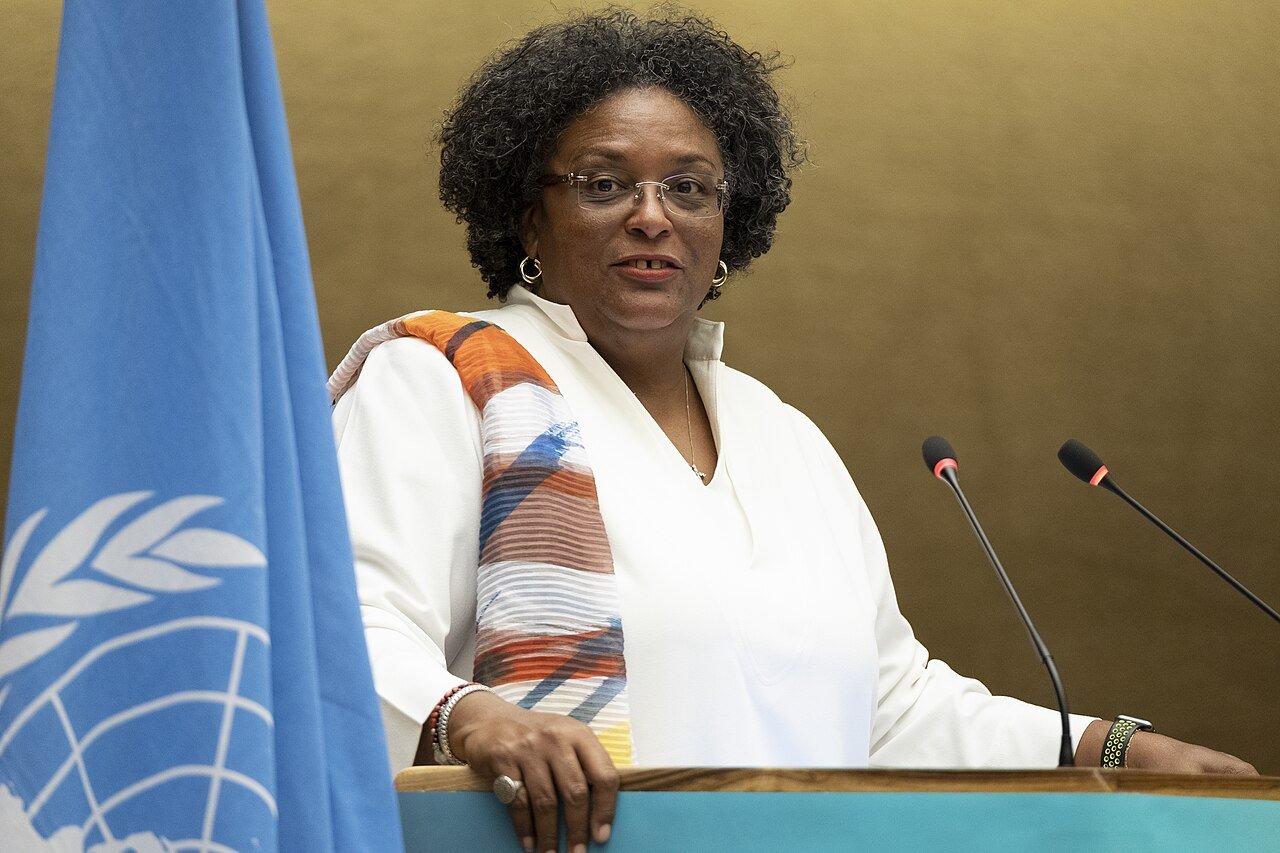
If COP30 could not save the world, where do we look for true climate leadership? Audley suggests we look to one of the countries most vulnerable to climate change, Barbados, and its Prime Minister Mia Mottley.
Mia Mottley is the first woman prime minister of the small Caribbean nation of Barbados. Elected to office in 2018 with the largest margin ever seen in her country’s electoral history, she inherited a country struggling to repay record-high debt and with crumbling social services. By the end of that year, she had boosted the country’s credit rating, enabling it to borrow on international markets once again and invest in social services.
The prime minister has also blazed a trail on the climate issue at home and is shifting views on how to address it globally.
Under her leadership, Barbados has developed a plan to phase out fossil fuels by 2030, ensuring as many homes as possible have solar panels on their roofs and electric cars parked outside. She has also overseen a plan to plant over 1 million trees in order to foster Barbados’ food security and increase its climate resilience.
What has enabled the prime minister to beat this path? It is her unique perspective on the problem of climate change. She is pushing fellow leaders to view it as a financial and economic challenge to address.
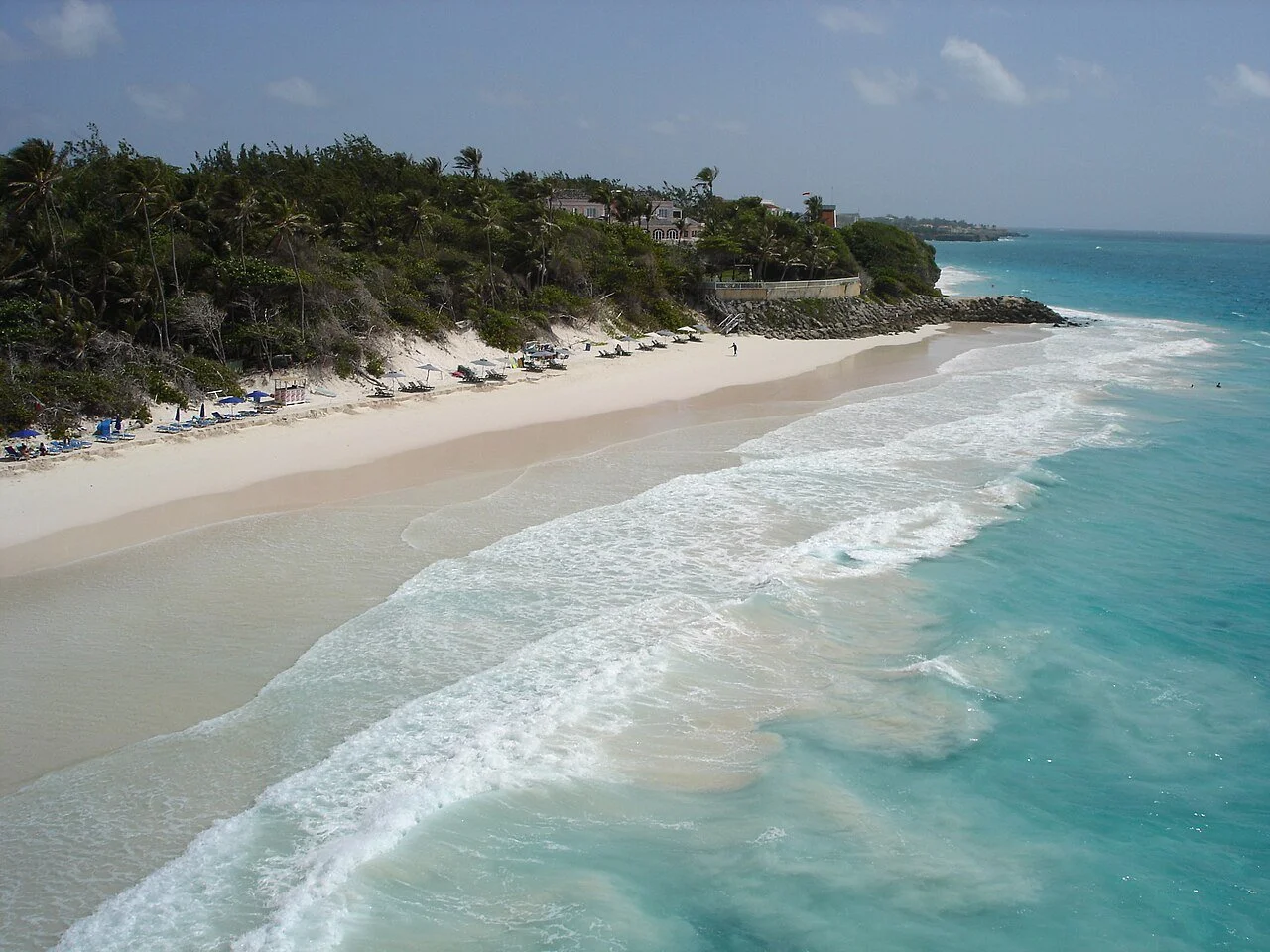
Image Credit/Patdoy at en.wikipedia/Licence
Small island developing states in the Caribbean and South Pacific face what has been described as an existential threat from the effects of climate change, including rising sea levels and severe storms. Despite their size, the UN Environmental Programme said last year that these states would have to spend upwards of $26bn annually to counter the effects.
This would add yet another burden to developing countries not only facing existential climate risks, but struggling with financial problems that have been exacerbated in recent years by the Ukraine-Russia war and rising costs.
Prime Minister Mottley sees the answer to this issue as “[securing] long-term funding.” She has said that the pressure to respond to climate challenges “affects your ability to finance your development on the Sustainable Development Goals” and limits fiscal space for other national priorities such as education, healthcare, and infrastructure.
The prime minister does not only want to help her country increase its resilience against the threats of climate change, but has taken up the fight on behalf of the smaller and developing nations who are, right now, most at risk.
Ingeniously, she has realised that a solution lies in reframing how the international community thinks about solving climate change. She has spearheaded the Bridgetown Initiative, named after the capital of Barbados.
This initiative, endorsed by UN Secretary-General António Guterres, proposes a number of concrete actions to reshape the international financial architecture to help developing nations tackle climate change.
These include rechannelling unused Special Drawing Rights through the IMF and development banks, supporting countries in restructuring their debt with long-term low interest rates, and mobilising over $1.5 trillion of private investment annually in the green transition.
Speaking on the climate to the UN in 2022, the prime minister said: “We can’t pretend day by day that someone somewhere else is going to make that change. This is our time to make that defining difference.”
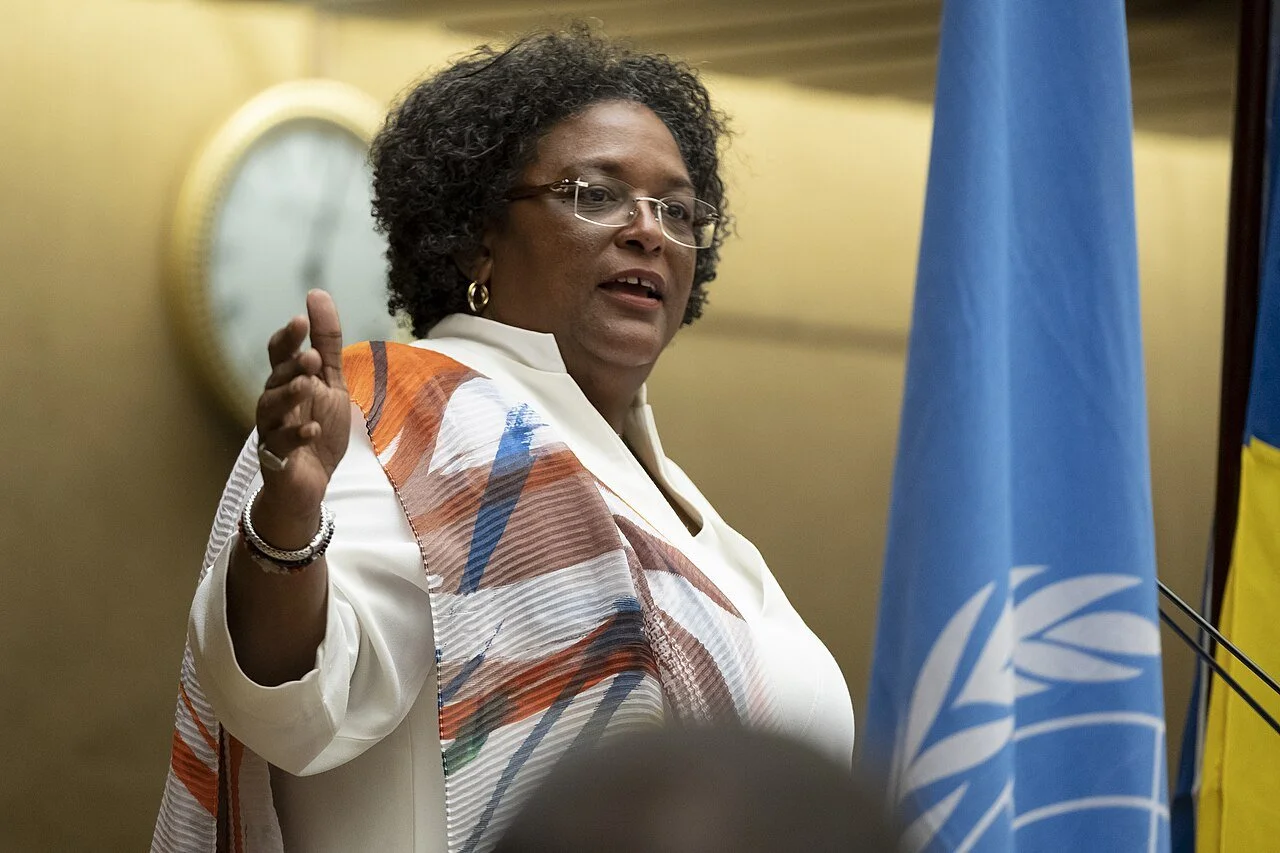
Image Credit/UNCTAD/Licence
This is an example of the impassioned communication style that has earned Prime Minister Mottley her role as advocate for developing countries at risk from climate change.
Speaking to the United Nations General Assembly in 2019, she delivered a wake-up call to delegates in a series of eye-opening rhetorical questions: “Some of the most severe consequences of climate change can no longer be avoided … How many times have we been told this? … How many times has science reinforced that there is a very threat to our survival?”
“Do you not see what is happening? Do you not care?”
Famously, she also quoted Bob Marley in asking world leaders: “Who will get up and stand up for the rights of our people?” It is not hard to see why she was being positioned as an agenda-setter for this year’s COP conference, and why there has long been discussion about her assuming António Guterres’ mantle as UN Secretary-General when he steps down.
Despite a year marked by increased tensions that have shifted the calculus on a number of global issues, the prime minister has remained steadfast in promoting the climate and development agenda to leaders and audiences globally.
In March this year, she called on leaders of developing countries gathered in Barbados to work together to ensure universal access to clean, cheap, and reliable energy, saying: “We need to create opportunities for each other, and I genuinely believe that that is entirely possible.”
Her communications have continued to reach for people’s hearts as well as their minds. As she told TIME Earth Awards in April: “We’re not going to win all the battles in the current geopolitical climate, but we can win a battle where there is common purpose … There are people whose very existence depends on us finding ways of building bridges through this difficult and challenging time.”
For her ‘unconventional wisdom’ on how to address the greatest challenge of our times; her unwavering dedication to her country’s future; for standing as a pillar of climate leadership in another tumultuous year; and for communications that are one of the strongest tools in her arsenal, Mia Mottley is Audley’s Unconventionally Wise Person of the Year.
By Harri Adams, Junior Advisor at Audley.
Image credit/UNCTAD/Licence