

Boxnote: Building Britain’s Resilience
Executive Summary
Britain’s ability to withstand external shocks has been tested repeatedly in the previous few years. A global pandemic, wars, energy and commodity price spikes, and cyber-attacks have led the public and policy makers to question whether the systems on which daily life depends are more fragile than Britons might care to admit. The particularly concerning scenario is where the UK faces multiple external shocks affecting multiple sectors and domains. This would likely expose the country’s ability Buito protect businesses and the public, and to quickly resume ‘normal service’. A serious policy debate is only just beginning on the subject of resilience. It is natural human psychology to prefer not to think about ‘disaster scenarios’ but as this Boxnote discusses, there are areas where Britain’s national resilience planning and policy appear deficient and in need of a serious response from government and the private sector.
Introduction
1. In the last 6 years, following the Covid pandemic, Russia’s full-scale invasion of Ukraine and the current conflict in the Gulf, national resilience has emerged as a key priority for the UK government. We would define national resilience as a country’s ability to not only withstand, but to mitigate against, adapt to and recover from large shocks – whether that be war, terrorism, cyber threats, or pandemics – by having the proper resources and contingencies in place.
2. Critical National Infrastructure (CNI) is a key element of this, and refers to the essential systems, networks and assets that keep the country functioning. The UK Government’s Resilience Action Plan,8 published on 8th July 2025, states that the government “works to improve the general resilience of the nation to all risks” consistent with the Strategic Defence Review, which “highlights our new ‘NATO First’ ambition and the widening of whole of society participation in resilience.” As the 2025 National Security Strategy states: “Threats to the homeland from state actors are increasing… critical national infrastructure – including undersea cables, energy pipelines, transportation and logistics hubs – will continue to be a target.”9 The recent conflict in the Middle East triggered a global energy shock, continued climate impacts threaten food and water supply and the UK faces a “perfect storm”10 for cybersecurity.
3. A key moment in elevating the issue of resilience was Russia’s invasion of Ukraine and subsequent sub-threshold attacks on European countries’ infrastructure. The invasion exposed how dependent Britain remains on external suppliers, foreign energy dynamics, fragile logistics, and privately owned digital infrastructure, and why disruption ‘at home’ can be strategically consequential even below the threshold of war.
4. More recently, we have seen the global effects of the ongoing conflict in the Middle East. In particular, the Strait of Hormuz crisis, whereby shipping traffic through the maritime choke point has been largely blocked by Iran, has had a far-reaching impact on energy markets, maritime transport and global supply chains. The continued closure of the Strait has the potential to cause severe and widespread disruption in the long-term, which underlines the need to build future resilience against such shocks.
5. This Boxnote treats resilience as the capacity of the UK to maintain or rapidly restore socially essential functions under stress, adapting quickly and efficiently when disruptions occur. Its focus is to explain the UK’s current level of resilience, excluding the defence sector, and examine effective measures and policy recommendations that are likely to improve this standing going forward. It focuses on four key areas of risk, namely: Energy, Food & Water, Civil Communications Systems and Civil Transport Systems.
6. The UK, or indeed any country, cannot eliminate risk entirely – it can only mitigate the risks through reasonable and robust systems, processes and planning. The true measure of resilience is whether shocks remain local, recoverable and affordable, rather than becoming national, prolonged and systemically destabilising.
Risk 1 - Energy Supply
7. The issue of the UK’s energy infrastructure was brought to a head by the Russia-Ukraine War. The reduction in Russian supplies caused global energy prices to soar, and pushed up consumer bills in the UK. While the UK reduced its dependence on Russian oil, and gas, it has remained exposed to volatility in energy markets as a result of the invasion and ongoing war.11 Research by the International Monetary Fund in 2022 found that of countries in Western Europe, the UK was the worst hit by the energy market crisis, due to its overreliance on gas. By way of example, the UK uses gas for roughly 85% of home heating and 40% of electricity generation. 12
8. As Rishi Sunak noted in his recent Op-Ed in The Times, “The medium-term worry for countries such as ours is that an energy-independent US may well decide that protecting global energy supplies is somebody else’s problem. Self-sufficiency can easily become selfishness.”13 As a fundamentally trade-dependent nation, this poses a significant challenge to leaders.
9. Britain became a net exporter of energy during the early eighties until the early 2000s – bar a brief period as a net importer after the 1988 Piper Alpha disaster. However, from the early 2000s the balance has gradually crept back toward net importation to levels not seen since the 1970s, as the peak production from North Sea oil and gas subsided. Britain is not alone; as of early 2026, the EU's energy import dependency rate stands at approximately 57%. 14
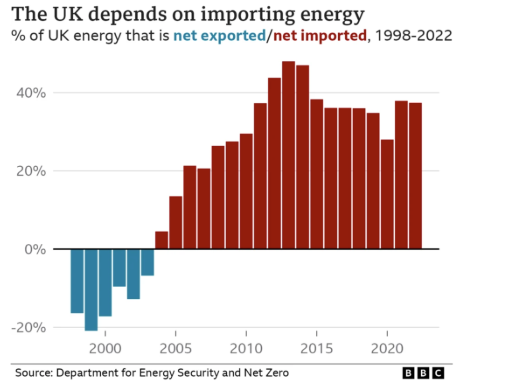
Figure 1: UK Import & Export Balance. Source: Department for Energy Security and Net Zero.
10. The current energy position is stronger than the narrative often suggests, but it remains structurally exposed. The 2025 Statutory Security of Supply report concluded that Great Britain should be able to secure sufficient electricity and gas over the near term, and forecast a 6.1GW derated electricity margin15 for winter.16
11. However, Britain’s net energy import dependency remained high, compared to historic levels, at 43.5%; fossil fuels still accounted for 75.2% of total energy dependency; low-carbon dependency was 21.8%; renewable generation rose to a record 152.5 TWh and 52.5% of electricity generation; but gas still provided 31.5% of UK electricity generation. Nuclear fell to a record low as the power station network aged (leading to a greater number and more prolonged level of outages) and stations were decommissioned.
12. Recent policy is beginning to answer these weaknesses, albeit only partially to date. The Department for Energy Security and Net Zero17 has announced a comprehensive energy resilience strategy for publication in 2026. It will be the first of its kind in the UK.
13. The strategy came as a direct result of the North Hyde incident and the subsequent recommendations. The North Hyde incident involved a substation outage on 20 March 2025 which resulted in a loss of all supply, impacting thousands of customers and most prominently Heathrow Airport. A review of the incident found that the design and configuration of Heathrow Airport’s private internal electrical distribution network meant that the loss of one of its three independent supply points would result in the loss of power to some of the airport’s operationally critical systems.
14. The strategy came as a direct result of the North Hyde incident and the subsequent recommendations. The North Hyde incident involved a substation outage on 20 March 2025 which resulted in a loss of all supply, impacting thousands of customers and most prominently Heathrow Airport. A review of the incident found that the design and configuration of Heathrow Airport’s private internal electrical distribution network meant that the loss of one of its three independent supply points would result in the loss of power to some of the airport’s operationally critical systems.
15. The infrastructure strategy will therefore back stronger resilience standards for instances such as the North Hyde outage (especially stress-testing for extreme events), accelerated transmission investment, and electricity connections and grid reform.
16. The government continues to face policy dilemmas when it comes to ensuring security of supply. One such example concerns Rosebank oil field and Jackdaw gas field. Supporters and stakeholders (i.e., producers and industry bodies such as OEUK) argue the operations could modestly strengthen security of supply by adding domestic production and reducing exposure to volatile international energy markets. Meanwhile, critics argue their output would make only a very small difference to UK import dependence (estimated as being able to displace only 1% and 2% of the current imports of oil and gas respectively, as reported in The Guardian April 202618), while potentially diverting investment from alternatives like renewables and efficiency that may improve long-term energy security more.
17. Policymakers therefore face intense lobbying from both sides and must strike a balance between seeking limited short-term supply resilience from new fossil fuel projects and prioritising a longer-term energy security (and climate friendly) strategy based on reducing reliance on fossil fuels.
18. On a local level, the Local Power Plan from Great British Energy19 and DESNZ offers up to £1 billion to expand local and community-owned clean energy. This includes solar, wind, battery storage, and possibly heat networks, and aims to encourage distributed generation and reduce pressure on the national grid infrastructure.
19. The most valuable resilience measures remain those which reduce single-point dependency. This may be substation hardening (flood protection, fire protection and weather resilience) or mandatory resilience reviews for sites with multiple and single supply points, as well as stricter backup expectations and black-start readiness for critical sites.
Risk 2 - Food and Water Supply
20. As with energy, the UK’s import-dependent food supply system is a key risk in 2026. Head of the National Farmers’ Union Tom Bradshaw warned at the Union’s February conference that Britain’s food security is at risk due to Britain’s reliance on imports - food prices hit a 40-year high in the wake of Russia’s invasion of Ukraine. Yet, as Bradshaw highlighted, “over recent years, the production of staples such as wheat, beef, poultry meat, and vegetables has all fallen.”20 Our food resilience is threatened by this decline in domestic production and measures to support it. The agricultural sector has faced compounding pressures of shocks from poor harvests as well as changing subsidies and inheritance tax raids.
21. The UK sources food from domestic production and international trade at around an overall 60:40 ratio. Extreme weather events continue to have a significant effect on domestic production, particularly arable crops, fruits and vegetables. Production levels fluctuate each year due to changes in both planted areas and yields, with weather conditions having a significant influence among other factors.21 In 2019 UK cereal production (25.5mt) was the highest so far this century, whereas in 2020 production (19.0mt) was the second lowest largely due to bad weather, demonstrating the high volatility that can be seen in domestic production.
22. In addition to extreme weather events, issues such as fertiliser prices - driven upwards by energy costs and supply disruptions, with latest estimates by World Bank predicting a 31% price increase in 202622 - are squeezing farmers’ margins, reducing their crop yields, and inflating food costs. As a result, farmers face decisions to reduce application rates or switch to less intensive crops, which ultimately risks lower production of staples like wheat and therefore drives up food insecurity.
23. However, Economist Impact’s inaugural Resilient Food Systems Index (RFSI) places Britain among the strongest-performing nations out of 60 countries assessed. Its release comes as global food systems face the mounting challenge of feeding an estimated 10 billion people by 2050.
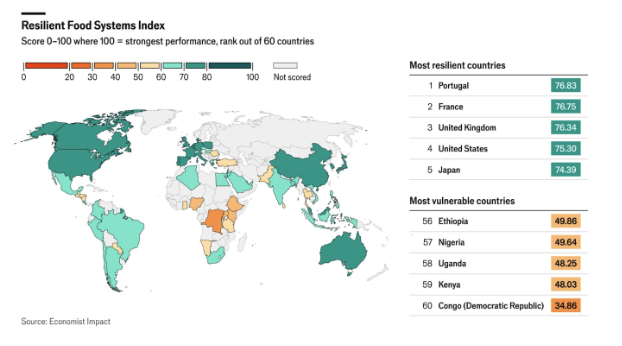
Figure 2: Resilient Food Systems Comparison (March 2026). Source: Economist Impact.
24. Support schemes and funding are critical to supporting domestic farmers increasingly under pressure. At a national level, across the UK, the area of land in agri-environmental schemes increased from 4,922 thousand hectares in 2021 to 5,872 thousand hectares in 2023. In England in particular, the amount of land in AES has been increasing since 2021 due to the increased uptake of Countryside Stewardship (CS) and the launch of the Sustainable Farming Incentive (SFI).23 These schemes directly improve farm resilience in the long-term.
25. Recommendations from National Preparedness Commission conclude that “the UK now lacks a coherent food security and resilience strategy fit for its actual status in 21st century geopolitics”; chief among its recommendations are a new Food Security and Resilience Act, an obligation on the state to ensure the public is fed in crises, “allocating responsibilities (and preparedness) on central and local government, and stipulating the principles for doing so”; a more realistic assessment of food as a Critical National Infrastructure issue; and the creation of a new National Council of Food Security and Resilience. The government’s stated ambition, as highlighted by Environment Secretary Emma Reynolds, is to see more British food on more tables, with SFI redesigned to support food production whilst managing land and protecting nature at the same time24.
26. Crucially, to maintain food security, there must be focus on building diversified food supply chains, increasing harvests where possible (such as the development of climate-resistant crops), and strengthening local and regional community-based food networks25.
Risk 3 - Civil Communications Systems
27. The primary threat to civil communications resilience appears to be malicious activity by hostile actors. In 2024, a cyber-attack on Synnovis, an NHS owned pathology company, halted blood testing and forced cancellations of surgeries across London, demonstrating how quickly a digital disruption can escalate into a major healthcare emergency.
28. In a similar attack on the public sector in 2020, Redcar and Cleveland Borough Council became one of the first high-profile victims when the authority was paralysed by a ransomware attack. The National Cyber Security Centre was deployed and the total cost to Redcar was an estimated £10m. Essential services like social care, planning and housing were severely affected. The council’s IT systems had to be completely rebuilt.
29. Beyond these public sector examples, there have been high-profile cases such as that of M&S in 2025. The cyber-attack led to a suspension of online orders and disrupted in-store systems for weeks. Personal data was also stolen in the incident, and it resulted in a £500m loss from the company stock market value. As technology systems become more advanced and embedded in businesses and the state, so do the proliferation and sophistication of cyber-threats against them.
30. Current government awareness campaigns around the essentials of cyber-security fail to land for many businesses (see figure below, with key guidance such as The Cyber Essentials Scheme only reaching 12% of businesses. At the same time, businesses and charities highlight a desire for clear, tailored, and actionable cyber guidance from the government. There is therefore a gap between education, relevance and what businesses are using to inform themselves day-to-day.
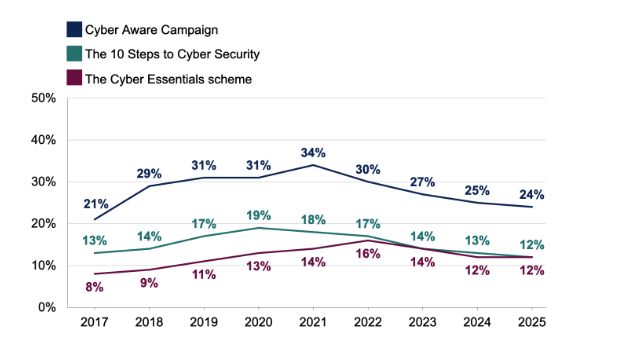
Figure 3: Percentage of businesses aware of government guidance. Source: GOV.UK
31. In terms of the existing policy base, Ofcom already has resilience guidance in force for communications providers. The Cyber Security and Resilience Bill being taken forward by the Department for Science, Innovation and Technology will expand the Network and Information Systems (NIS) Regulations 2018 to data centres, managed service providers and large load controllers, give government greater agility to respond to new threats, and is estimated to cost around £150 million per year across affected businesses.
32. Data centres have been an area of growing focus as they become more critical to the digital infrastructure of daily life. They are at risk from both physical threats – fire, theft, environmental damage – and digital threats – primarily, cyber-attacks – and these must be guarded against. Data centres are now designated as essential services, with data infrastructure recognised as a sector under the aforementioned NIS Regulations 2018. This will introduce regulatory duties for operators of UK data centres above defined capacity thresholds, requiring them to notify Ofcom and satisfy structured information requirements, implement proportionate security and resilience measures, and report significant incidents.26
33. The infrastructure strategy also commits to sovereign compute capacity and £2 billion to deliver the AI Opportunities Action Plan, while signaling over £40 billion of planned private industry investment in full fibre communications networks by 2030.27
34. The Government Cyber Action Plan has been produced largely due to the recognition that digitisation of public services has in itself put the government at risk. The 2025 review found “systemic challenges underpinning our current resilience status” including institutionalised fragmentation; persistent legacy, cyber security, and resilience risk; siloed data; under-digitisation; a digital skills shortfall.
35. Among the ongoing commitments of the Cyber Action Plan28 is building critical functions, which will be the foundation of the Government Cyber Unit. The Unit, which will sit within the Department for Science, Innovation and Technology, will be formed by April 2027. It will “coordinate risk management and incident response across departments.” The government will aim to “create a set of functions” to give the unit "the right structures, resources, and skills to lead in cyber security and resilience with a focus on continuous improvement.”
36. Key recommended measures for communication resilience are: a tiered power-backup regime for mobile sites, prioritising emergency coverage and critical public sites; mandatory continuity planning for public bodies dependent on foreign cloud services; stronger cable and landing-station (where undersea fibre-optic cables connect to terrestrial networks) risk assessment; and a more explicit resilience standard for emergency communications interoperability.
Risk 4 - Civil Transport Systems
37. The Department for Transport and the Met Office identified numerous transport vulnerabilities in their ‘Transport hazard summary: risks and resilience,’ published in May 2025.29 These can be broken down into hazards, “non-malicious event[s] that [are] dangerous and likely to cause damage, such as extreme weather, accidents or the natural outbreak of disease”; and threats, which are by contrast malicious and include acts of terrorism and cyber-attacks.
38. Cyber threats are an object of particular concern given the “highly interconnected nature of the UK’s transport infrastructure and its reliance on only a relatively small number of critical operators and transport corridors.”30 Much in Britain depends on this highly interconnected infrastructure. As Risk Ledger writes, transport on Britain’s road network of more than 245,000 miles “accounts for around 80% of inland freight movements in the UK.” Meanwhile, our roughly 10,000-mile rail network “[carries] more than 18,000 passengers and 1,000 freight trains every day.” Britain is also heavily dependent on maritime transport for international trade, importing and exporting “95% of goods by weight through our ports.”
39. There are obvious implications, not only for UK citizens using transport networks, or the economic consequences resulting from networks not being used due to hazards or threats, but to the viability of critical supply chains. The increase in management of this infrastructure through digital means, places a greater risk in the event of a cyber-attack.
40. DSIT’s Cyber Security and Resilience policy statement, issued in April 2025, similarly notes that ‘adversaries’ are “exploiting vulnerabilities in critical infrastructure and supply chains, using tools, such as artificial intelligence and commercial cyber capabilities,” and that our “growing dependency on technology has made supply chains particularly vulnerable, with ransomware and data extortion emerging as significant threats.”31
41. Industry leaders point to the importance of multi-stakeholder co-ordination and dedicated resource from government. For example, “Investment relief measures would help CNI operators meet the National Cyber Security Centre’s Cyber Assessment Framework standards by easing financial constraints and incentivise them to maximise their spending on cyber security”32, as outlined by Thales’ CEO. To avoid the vulnerabilities that arise from lack of funding and lack of coordination, the government must have “a dedicated, ring-fenced budget for CNI protection, supported by additional regulation to increase resilience such as backup control rooms at key CNI plants” as well as a “clear monitoring strategy” that might include AI and drone capabilities for predictive maintenance, particularly when it comes to critical sites.
42. This highlights the need for meaningful collaboration between government, private sector and industry bodies to ensure effective solutions are found to meet the increasingly complex challenges, and to ensure that the problem is given the funding it requires to secure CNI. As the Vice President of Dragos points out, “budget constraints are prompting teams to relax vendor checks or ease remote access rules, widening exposure precisely when it needs to be narrowing.”33
43. The UK government’s 10-year Infrastructure strategy34 includes “£15.6 billion investment for public transport systems through the Transport for City Regions settlements”; “better connecting the major northern English towns and cities – and increasing agglomeration, fostering sectoral clusters alongside key infrastructure investment”; also “supporting fast growing economic clusters such as the Oxford to Cambridge corridor, as well as investing to better connect the major northern English cities and towns.” A key part of the strategy will be a “comprehensive reset of the HS2 programme”. The National Infrastructure and Service Transformation Authority (NISTA) was created to oversee the strategy.
44. With a rationale of boosting growth through better transport connectivity, “making more places as strong and resilient as possible”, the strategy also commits to “focusing on the basics through long-term investment in road and rail maintenance to address backlogs, fixing potholes and ensuring existing networks are resilient to long-term challenges including climate change.”
45. At the same time, the government will look to provide more secure forms of energy supply to the network: “providing £2.6 billion capital investment to decarbonise transport from 2026-27 to 2029-30 to continue to support the rollout of electric vehicles and the required charging infrastructure, as well as encouraging innovation in hard to abate sectors like maritime and aviation.”
46. Think tanks such as the Alan Turing Institute have conducted valuable research into the use of AI innovation to increase resilience of CNI, including transport infrastructure.35 For example, they have developed ‘Smoke and Mirrors,’ which: “uses AI to create virtual [operational technology] environments that convincingly mimic real industrial systems, deceiving malware [malicious software] into revealing its behaviour and intentions. Believing it has reached its target, the malware activates as it would in a real-world deployment.” Effectively, the threat is tricked into attacking a ‘dummy’ target made by AI.
47. Fleet News, reporting36 on the UK Government’s ‘Climate adaptation strategy for transport,’37 published in December 2025, notes “weather-related incidents cost Network Rail more than £1 billion in compensation payments” from 2006-21, while according to Defra, “winter floods between 2013 to 2014 caused significant disruption to the Strategic Road Network, with costs estimated to be £180 million.” The Government’s key commitments in its strategy to address climate risk include “stronger national objectives for climate adaptation and the introduction of climate resilience standards by 2030,” in line with the 10-year infrastructure strategy. Department for Transport will also provide £1bn funding to local highway enhancement projects.
48. However, the Climate Change Committee, an independent, statutory body established under the Climate Change Act 2008, has said UK efforts to address multiple risks of increase in global temperatures – among them, a 45% decrease in summer precipitation and 39% increase in winter precipitation – have been “too slow, have stalled, or are heading in the wrong direction.” 38
Building Resilience Through Cross-Sector Initiatives
49. The first cross-sector requirement is governance. A binding essential services resilience framework should be created, led by the Cabinet Office together with HM Treasury and NISTA, to define minimum service standards for continuity and recovery across energy, food distribution, communications and transport. This should not replace sector regulation; it should sit above it and force comparability. The current policy base already contains the necessary building blocks: a whole-of-society action plan, mapping of resilience standards by end-2026, and publication of strengthened standards in priority sectors by 2030. Turning this architecture into a managed programme with annual ministerial review and explicit spending consequences will ensure further resilience.39
50. The second is data sharing with legal force. The CNI knowledge base is a promising start, but it should become a live national resilience data space with compulsory contributions from regulated operators and selected key suppliers. Major incidents should be reportable not only within sector silos but also across sectors where cascading effects are possible. The Cyber Security and Resilience Bill is instructive here because it expands scope, allows government to respond to emerging threats, and provides a template for stronger incident reporting and oversight. Similar logic should apply to physical and operational resilience, not only cyber.
51. The third is to treat public–private roles more honestly. Much essential infrastructure is privately owned or commercially operated, but the consequences of failure are social and national. This creates an under-investment problem: operators may rationally under-provide resilience where benefits spill over to the wider system. Therefore, a clearer settlement would be of benefit in which operators fund resilience that protects their own service continuity, while the state co-funds measures that deliver broader public-good value, especially where resilience standards are set above what a competitive market would normally provide. The same logic should apply to community resilience: the action plan is right that government cannot do it alone, but “shared responsibility” must be matched with grants, training, exercises and trusted local institutions, not just exhortation. 40
52. The fourth is workforce development and R&D. Critical resilience bottlenecks are increasingly about skills: power-system engineers, cyber defenders, telecoms field teams, HGV drivers, control-room operators, agri-tech specialists, and local resilience planners. The UK Resilience Academy is a useful beginning, with plans to train over 4,000 individuals in its first year, but it needs linking to sector workforce plans and funded technical pathways. R&D should be directed toward practical resilience outcomes: climate-adaptation tools, alternative communications, grid flexibility, cold-chain efficiency, protected cropping, digital-twin modelling, and sovereign compute for critical public services. The infrastructure strategy’s emphasis on sovereign compute and the AI action plan is relevant here, but it should be tied more directly to continuity of essential functions, not only productivity and innovation.41
In Conclusion
53. As established at the outset, the UK cannot eliminate risk entirely but must ensure that a set of principles are adhered to across sectors to mitigate the impact of disruptions. We must better use the resources that we have and ensure continuity, whether that be through a highly diversified supply chain for food, sufficient back-up contingency plans for energy or more investments in risk-assessments and proper contingency planning for emerging and evolving cyber-threats. A whole-of-society approach is needed, whereby private sector, public sector, think tanks and individuals all play a role in building such resilience.
Update: What Has Changed
May – September 2026
Since this Boxnote was written in May 2026, the risks it set out have continued to crystallise, whilst the policy response also gathers pace. We have outlined the five key developments worth noting.
1. Cross-sector governance. On 14 July 2026, the government published its UK Government Resilience Action Plan: 2026 Implementation Report, committing to updated National Resilience Standards for Local Resilience Fora and a UK Resilience Forum convening representatives from across the whole of society, both due in autumn 2026, alongside a pilot Critical National Infrastructure Cyber Resilience Index.1 The Cyber Security and Resilience Bill, which this Boxnote identified as an instructive model for incident reporting, passed its House of Lords Second Reading that same day and reached Committee stage in August 2026, though peers across parties criticised its narrow scope and its lack of provision for AI-enabled threats.2
2. Energy. The government published an Energy Sector Cyber Security Strategy in June 2026, a four-year roadmap to strengthen understanding of, and preparedness for, cyber threats across the sector.3 Separately, the National Energy System Operator's handling of the June 2026 heatwave has come under parliamentary scrutiny, following whistleblower allegations that grid security standards were breached and that commercial considerations influenced control-room decisions. The episode has renewed questions about the resilience of the electricity system under periods of acute stress. The government maintains that supplies were maintained throughout and has commissioned an independent investigation, due to report within weeks.4
3. Food and water supply. This risk moved from the theoretical to the immediate over the summer. By mid-August 2026, over 71% of England was in official drought, reservoir storage had fallen to 68%, and 27 million people were under water-use restrictions; farmers reported the worst harvest on record. The government announced a £65 million support package on 15 August 2026, while industry bodies continue to press for greater investment in on-farm storage and demand management.5 The summer has underlined the extent to which water resilience is becoming an immediate economic and food-security issue, rather than a longer-term climate risk.
4. Civil communications and cyber. In one of the most significant confirmations since publication, a New York Times investigation drawing on Microsoft, the FBI, the National Crime Agency and the National Cyber Security Centre (NCSC) reported on 26 June 2026 that Russian state-linked hackers were behind the 2025 Jaguar Land Rover cyberattack, which required a £1.5 billion government-backed bailout and cost the wider economy an estimated $2.5 billion.6 It is among the clearest illustrations to date of how hostile-state cyber activity can exploit vulnerabilities in the commercial and industrial base, which this Boxnote identified as under-protected, with consequences extending well beyond the company targeted.
5. Civil transport. The Implementation Report confirmed that a dedicated Transport Resilience Strategy is due later in 2026, intended to set a coordinated, UK-wide approach to assessing, preparing for, and recovering from disruption, building on the climate adaptation commitments this Boxnote already covered.7 Its publication will be an important test of whether the government's emerging whole-of-society resilience approach translates into clearer sector-level responsibilities and preparedness.
Taken together, these developments reinforce the central themes of the original Boxnote, whilst underlining how quickly the resilience landscape continues to evolve. We will continue to track these developments as policy responses take shape and new risks emerge.
By Emily Callaghan-Sloane